
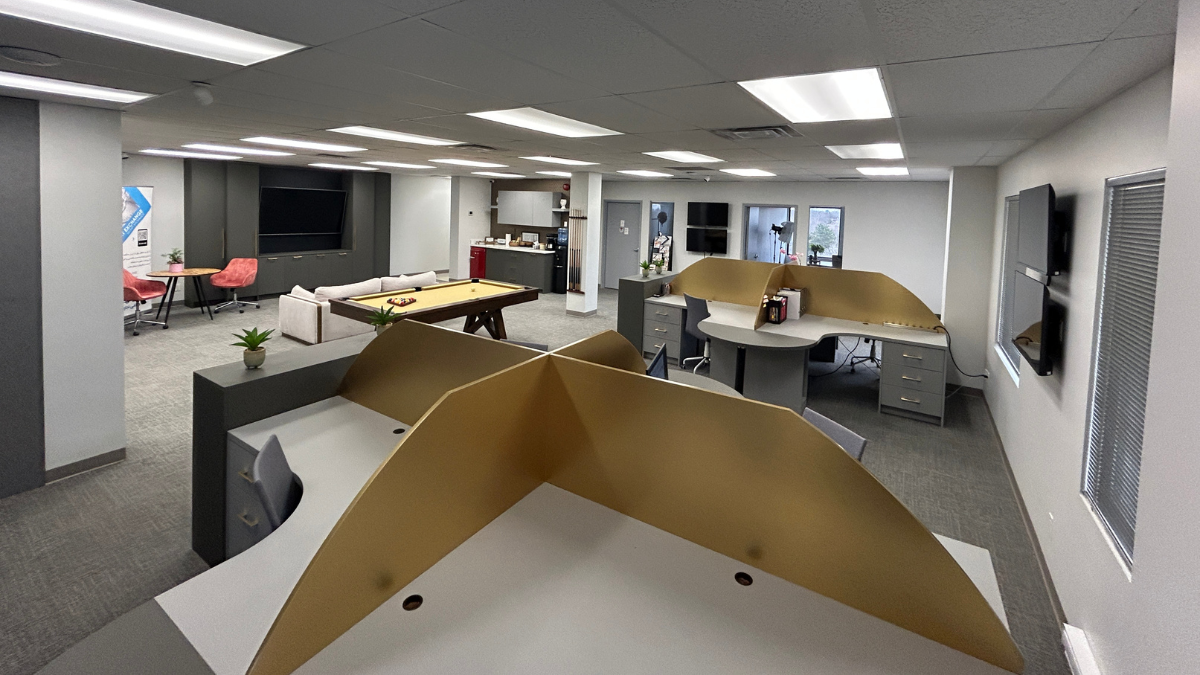
There’s a version of 2026 where everyone works from a sleek home setup, fully dialed-in, no commute, no noise. That version exists — but for a growing number of professionals, the story ends somewhere else: in a shared office space.
For a lot of freelancers, consultants, and small teams, the reality looks more like this: a kitchen table that doubles as a desk, a living room that’s slowly becoming a war zone between work and life, and a growing feeling that something about this setup just isn’t working anymore.
A private office lease feels like too much — the commitment, the cost, the paperwork. A virtual address feels like too little. So what actually fits?
The problem with “working from home works fine”
It does — until it doesn’t.

Home is great for focused solo work on good days. But good days aren’t every day. There are mornings when the background noise wins, afternoons when the boundaries between work and not-work completely dissolve, and weeks where you realize you haven’t had a single face-to-face conversation that wasn’t on a screen.
That erosion is slow, and most people don’t notice it until they’re already burned out or, worse, losing clients because they can’t show up the way they used to.
What a virtual office actually gives you
A mailing address. That’s it.

A lot of small business owners sign up for a virtual office because it looks professional on paper — and it does, to a point. But the moment a client asks to meet, or you need a quiet room for a serious call, or you just need four walls that aren’t your apartment, the virtual setup runs out of answers.
You’re still working from the same couch. You just have a fancier address on your business card.
Why a shared office space fills the gap nobody names
Here’s what’s interesting about shared office spaces in 2026 — they’ve quietly gotten very good. The early coworking model was a bit chaotic: open floors, too much noise, a startup-bro energy that didn’t suit everyone. That era is mostly over.
What’s replaced it is something more practical. Dedicated desks, private meeting rooms, real internet, real coffee, and — this part matters — a building you actually want to be in.
You pay for what you use. No long lease, no furniture budget, no IT headaches. When you need more space, it’s there. When you don’t, you’re not paying for it.
The shared office space meeting room advantage
One of the most underrated costs of working from home is the meeting room problem.
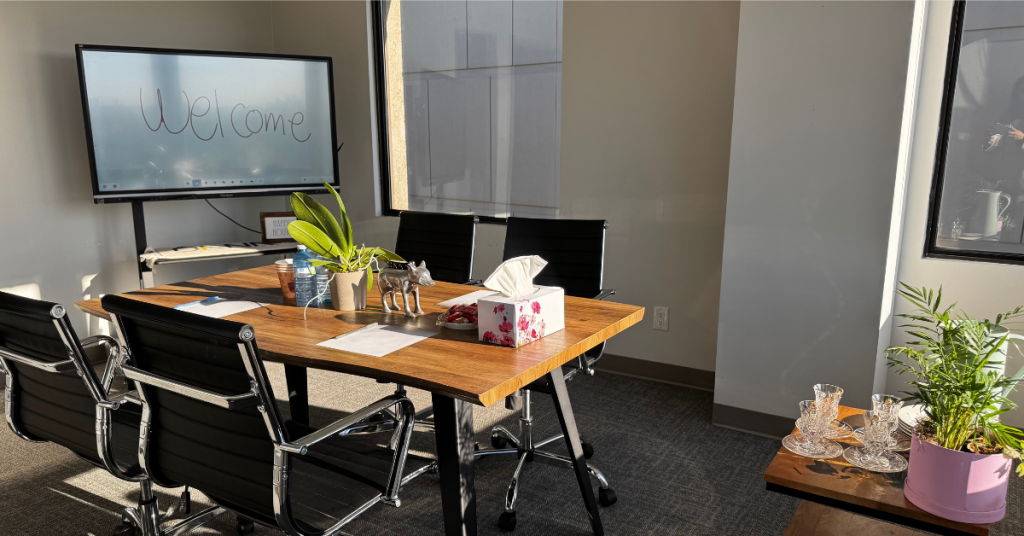
Where do you take a client who wants to meet in person? A coffee shop with bad acoustics and someone else’s conversation bleeding into yours? A hotel lobby that costs $30 in parking? These aren’t dealbreakers — but they add up, in money and in how you come across.
A shared office means you have a room. A real one, with a door and a screen and chairs that match. It’s a small thing, but the first impression you make in that room is different from the one you make over a laptop camera.
The people around you aren’t just background noise
This one’s hard to quantify but real.
Working near other focused people — even strangers — changes how you work. Not because someone’s watching, but because the environment sets a different expectation. You sit down at a desk in a shared office space and the context is clear: this is work time.
Beyond the ambient energy, there’s the actual community. Not in a forced, organized-mixer way — just the natural kind that happens when you’re around other professionals regularly. The designer two desks over. The consultant you keep running into at the coffee station. These conversations don’t happen over Slack. They happen in person, and they turn into referrals, collaborations, and sometimes just the kind of outside perspective you needed on a problem you’ve been staring at too long.
The math in a Canadian market
In Toronto, a private office lease runs somewhere between $2,000 and $4,500 per month — before internet, utilities, or anything inside the walls. That’s before you’ve bought a single chair.
A shared office membership in the same city can run $300 to $700 a month depending on access level. Full amenities, furnished, move-in ready. For a solo operator or a small team that doesn’t need a dedicated floor, the comparison isn’t close.
The flexibility matters just as much as the price. A lease locks you in. A shared office space membership adjusts when your business does.
Who actually benefits from a shared office space?
Not everyone needs a shared office. If your work is entirely async, fully remote, and you’ve genuinely built a home setup that works — that’s a real thing and it works for some people.
But if you’re a consultant who meets clients, a freelancer who’s losing the battle against home distractions, a founder who needs a real address and a real room, or a small team that outgrew the “let’s just all work from home” phase — shared office is worth looking at seriously.
It’s not a compromise between home and a lease. In 2026, it’s its own category — and for a lot of businesses, it’s the right one.
Luminic’s shared office spaces in the GTA are designed for people who take their work seriously — without the overhead of a full lease. [Book a tour to see the space.]